books
Books I Reread Every Year (And Why They Still Hit Different)
December 5, 2025
Some books you read once. These are the ones I keep coming back to — not because I forgot them, but because I'm different every time I pick them up.
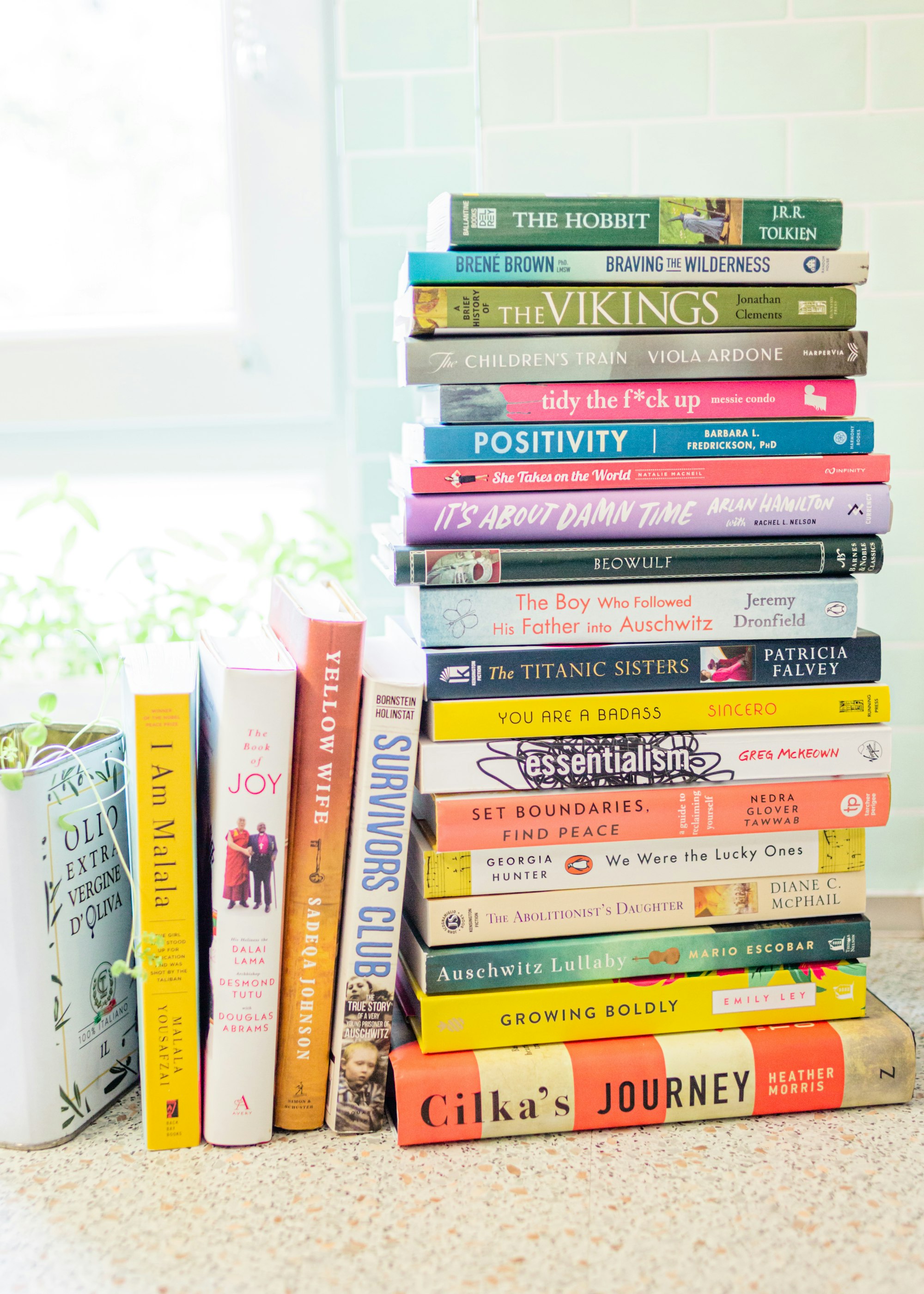
I used to think rereading was wasted time. Once you know the ending, the plot twists are dead. You’ve already extracted the core ideas. Why bother?
Then I hit 30 and realized that was stupid thinking. The book doesn’t change, but you do. You pick up the same words and suddenly they hit a different nerve because you’ve lived more, failed more, understood more about how people actually work.
The difference between a book you read once and a book you reread every year is this: the first teaches you something new. The second teaches you something different each time.
How Rereading Actually Works
There’s a reason some books stay on the nightstand and others end up at the thrift store. It’s not because the good ones are “better written” (though they usually are). It’s because they compress wisdom in a way that pays compound interest over years.
The first time you read a book, you’re catching the surface argument. You’re following the plot, tracking the main ideas, highlighting the obvious wisdom. But a lot happens beneath that. Metaphors that didn’t land because you weren’t ready. Secondary characters that suddenly make sense three years later when you’ve made their mistakes yourself. Warnings you ignored because you thought you were different.
Books like this work like a mirror that gets clearer the more times you look into it. You don’t see your current self — you see who you were, who you thought you were, and who you’re becoming. That gap matters.
The Books That Made the Cut
I have about five books that live in permanent rotation. Not on my to-read pile, but on the actual read-again pile. Here’s what’s sitting there and why I keep coming back.
Man’s Search for Meaning by Viktor Frankl
This is the one I reread when everything feels pointless. Not because I forget what it says, but because Frankl’s clarity about meaning — what it is, where it comes from, what happens when you lose it — somehow hits harder each time.
The first read was intellectual. He survived concentration camps and concluded that meaning, not happiness, was what kept people alive. Okay. That’s a profound statement. I understood it.
The second read, after I’d had a project fail spectacularly, it wasn’t intellectual anymore. I wasn’t reading about his prisoners. I was sitting in my own smaller version of that dark and trying to find meaning in it. The words were the same. But my desperation was real now, and his clarity felt like a hand in the dark.
The third time, I wasn’t in crisis at all. I was comfortable. And suddenly the book reads as a corrective: you’re busy optimizing for comfort and ignoring what actually makes life worth living. That’s the opposite of what I got from it the first time.
Finite and Infinite Games by James Carse
Every year at some point I feel the pressure to win at something — finish faster, outmaneuver someone, cross some invisible line first. Then I pull this book down and remember that I’m playing the wrong game.
The first time I read it, the concept was abstract. Finite games (played to win) versus infinite games (played to continue playing). Cool framework. Doesn’t apply to me, I thought. I’m not that competitive.
By the second read, I’d spent eighteen months grinding on a project with obsessive focus. I was winning at something, but I was miserable. Carse’s words about finite players getting bored after victory suddenly stopped being philosophy and became autobiography. I was living it.
Now when I reread it, I notice different sections. I see where I’m treating things as finite — relationships, creative work, my own growth — that should be infinite. The book didn’t change. I did.
Steal Like an Artist by Austin Kleon
This one’s almost a ritual. I return to it when I’m feeling uninspired or when I’m caught between my taste and my current ability. Kleon’s core message — that your taste is real and developing your skills is the work of years — shouldn’t need rereading. But it does.
The first time: permission structure. I was allowed to want things I couldn’t yet create. Okay, that felt good.
The second time: toolkit. Here are actual things to do to bridge that gap — copy, remix, build on what you see. The book was the same, but I was ready for different parts.
Last year I read it before starting something new, and suddenly it was a mirror of my process. I could see where I was copying well and where I was just imitating. I could see where my taste had grown and where my skills had actually caught up. That shift — from the book teaching me about theory to the book helping me diagnose my actual work — that’s what rereading does.
The Courage to Be Disliked by Kishimi & Koga
I reread this one every few years and have a different argument with the philosopher each time.
First read: I was excited by the boldness of the ideas. You’re not responsible for how others feel. Your past doesn’t determine your future. You can choose courage right now. It felt almost too simple.
Second read: I started pushing back on the philosopher the way the young man does in the book. What about real constraints? What about people who depend on you? The book handled the objections better than I expected. I wasn’t arguing with the pages — I was arguing with myself.
Third read: I wasn’t arguing anymore. I was observing where I’d actually applied it and where I’d given myself permission to hide behind practical limitations. The book’s arguments hadn’t changed. But my excuses had become visible.
Show Your Work by Austin Kleon
This is the one I reread when I’m about to start something new and I’m paralyzed by the gap between vision and current ability.
The message is simple: share your process, not just the result. Do the work in public. Show the messy middle. You don’t need permission and you don’t need to be finished.
First read: liberating. I can ship sketches, half-formed ideas, rough drafts. I don’t need polish.
Second read, during a project I was overcomplicating: a corrective. I’d forgotten the permission I gave myself. I’d slipped back into perfectionism and secrets. The book reminded me.
Third read: I noticed I was showing the work but still overcontrolling the narrative. Still hiding the real failures behind curated process. That level of self-awareness didn’t come from new information — it came from applying the old information and seeing where I was still stuck.
Why Rereading Beats Reading Everything Once
There’s a pressure in media culture to always be consuming the new thing. Finished one book? Grab the next. But that’s learning like a tourist — taking in the sites but not living anywhere.
Rereading the same five books deeply builds actual change. You internalize the logic. You start noticing how the ideas connect to your actual life instead of existing in abstract space. You develop opinions about the arguments instead of just accepting them.
The books I reread have moved from being “things that taught me something” to being reference points for how I think. When I’m stuck on something, I don’t just remember a passage — I have a whole dialogue with the author’s thinking because I’ve done it so many times.
How to Pick Books Worth Rereading
Not every book deserves a second read. Some books are one-time downloads. They teach you something, you apply it, you’re done. That’s fine.
But the ones worth rereading tend to have these qualities: They compress wisdom without reducing it. They work at multiple levels. A first-time reader gets practical takeaways; a fifth-time reader gets philosophical depth. They hold questions instead of just answering them. The best reread books don’t feel closed — they feel like you’re having an ongoing conversation with the author.
They’re usually shorter rather than longer. Fluff is unbearable on the reread. Carse is maybe 120 pages. Kleon’s books are slim. Frankl’s is brief. The density-to-length ratio has to be high enough that rereading doesn’t feel like grinding.
If you’re looking for where to start, books that changed how you think about money often have this rereading quality — they hit both your logic and your emotion. And if you’re not interested in typical self-help books, the serious ones in that category tend to reward rereading because they’re actually arguing something rather than just cheerleading.
The Real Reason I Keep Coming Back
I could sum this up with some clean takeaway, but the truth is simpler: these books know me better than I know myself. They catch me at different angles. They remind me of things I forgot I believed. They call me out on contradictions between what I say and how I live.
That’s not something a new book can do, at least not the first time through. A new book surprises you. But these books understand you in a way that only happens after you’ve read them through a few seasons of your life.
The difference between reading widely and reading deeply is the difference between seeing and knowing. I can read a hundred books and forget most of them. But a handful, reread year after year, become something closer to friends — people who show up when you need them, who remind you of who you’re trying to be.
That’s the real reason they still hit different.