personal-development
The Journaling Method I Actually Stuck With
November 24, 2025
I've tried morning pages, bullet journals, and gratitude logs. They all died within a month. This one didn't.
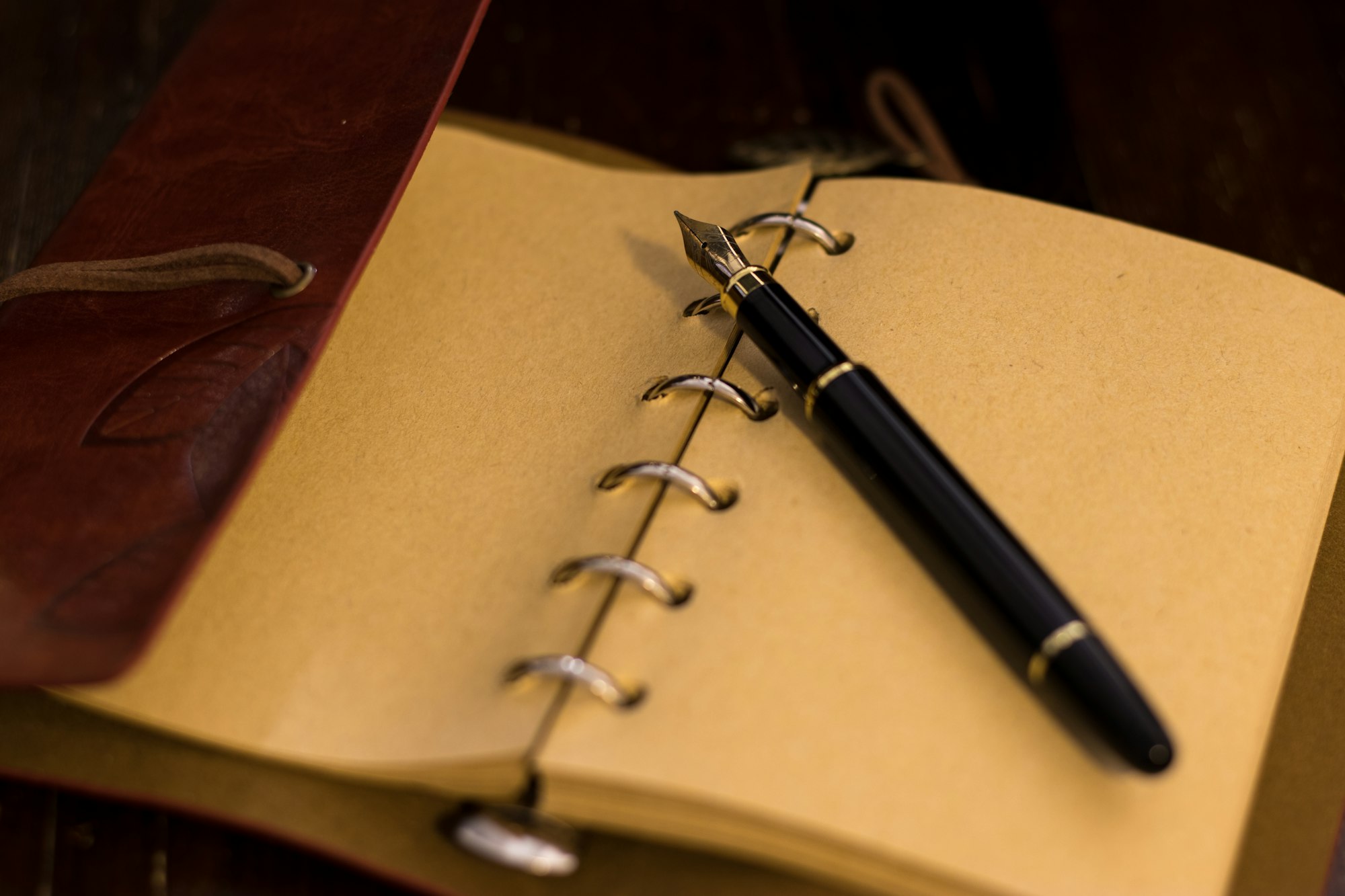
I’ve bought fourteen notebooks. Not exaggerating. I’ve got a shelf that looks like the rejected-concept section of a stationery store. Leuchtturm1917 with dotted pages for the bullet journal I swore would change my life. A leather-bound one for morning pages—three pages of stream-of-consciousness every dawn, like I was Julia Cameron’s most devoted disciple. Fancy graph paper for some productivity system I found on a podcast. Bright ones, minimalist ones, ones with built-in prompts for gratitude. Each purchase came with the same internal promise: This time will be different.
None of them lasted. Not a single one made it past four weeks.
The problem wasn’t the notebooks. It was me trying to journal like I was supposed to instead of like I actually work.
Every journaling system you find assumes you’re either a morning person or have the kind of life that fits into neat categories. Morning pages demand you sit down before the day hijacks you. Bullet journals require maintenance and artistic energy I don’t have at 6 a.m. Gratitude logs are beautiful until you realize you’re forcing yourself to feel thankful for electricity and indoor plumbing. These aren’t bad methods. They’re just not methods for someone like me—someone who thinks best in fragments, who works best when tired, who moves through days in bursts of intensity followed by nothing.
I’d start strong for two weeks, feeling virtuous and in-control. Then I’d miss a day. And missing a day meant the system had failed me, which meant I’d failed the system, which meant I was back to being the person who couldn’t even keep a journal. So I’d abandon it and buy a new one, hoping the next notebook would somehow match the fantasy I had of myself.
What I never tried was journaling for my actual life, not the life I thought I should have.
The method that finally stuck came from nowhere. I didn’t plan it. I was stressed about something—a client problem, a decision I was sitting on—and I just started writing. Not pages. Not a prompt. Not with any structure. Just a single question in the middle of a blank page: What’s actually happening?
Then I’d write the answer. Not the problem the way I’d explain it to someone else. Not the polished version where I seem like I have perspective. The raw version. The petty version if that’s what came out. The confused version. Usually it was a paragraph or two. Sometimes a list of contradictions. Sometimes just a single sentence that cut through all the noise.
That was it. No second page. No daily ritual. No tracking or maintaining. Just: something’s bugging me, I write what’s actually happening, I close the notebook, I move on.
I started doing this maybe twice a week when something felt stuck or unclear. Not because I’d forced myself to journal every morning. Not because I’d read that you should journal daily. Just because sometimes I’d get to a point in the day where I couldn’t think straight, and writing it out actually worked.
The magic wasn’t in what I wrote. It was in what I stopped doing: I stopped trying to journal like a disciplined person and started using the notebook like a tool. Like a hammer, not a meditation practice. Like a way to untangle my own thinking, not to become someone who journals.
Six months in, I’ve filled maybe twenty pages of that single notebook. There’s no theme. No consistency. No narrative arc. Some days I wrote a full paragraph about a decision I was overthinking. Some days I just listed what I was afraid of. Some days I came back two weeks later and the crisis had already resolved itself, and I could see how much mental space I’d wasted on something that didn’t matter.
The pattern emerged not from the ritual, but from the honesty. When you ask yourself what’s actually happening instead of what should I think about this, the answer changes. You stop performing for yourself. You’re not writing pages for some future self who’ll read them and feel wise. You’re just asking your own brain a question and listening to what it says.
What’s different about this method is that it doesn’t require you to be someone you’re not. It doesn’t demand you wake up earlier or have the energy to sit still. It doesn’t need you to maintain a habit. It just asks: When you’re stuck, would you rather sit in the confusion or spend five minutes writing it out?
Most days, the answer is obvious.
The thing I didn’t expect was how this kind of writing clarifies what I actually need to do. Not in a magical way where the answer appears on the page. But in a practical way—when you write out the raw version of what’s happening, without the spin, you see the shape of it. You see which parts are real problems and which are just noise. You see what you’re actually scared of versus what you’re telling yourself you should be scared of. And sometimes you see that you’re not confused at all; you just needed to stop performing confusion.
I’ve tried to explain this method to a few people, and most of them want more structure. They want to know how often to journal, what time of day, whether it’s better in the morning or evening. They want rules that will make it stick. But the reason this one stuck for me is because it has no rules. It’s not a system. It’s just a place to be honest for five minutes when you need it.
I’m not going to tell you this will change your life. It’s changed mine, but quietly. I’m clearer about decisions. I waste less mental energy on problems that disappear when you stop turning them over. I trust myself more because I’m actually listening to what I think instead of what I should think. But those are the benefits that come from actually being honest with yourself, and you don’t need a notebook for that. The notebook is just permission to try.
If you’ve failed at every journaling system like I have, maybe it’s not because you’re undisciplined. Maybe it’s because you were trying to journal like someone else. Like a morning person. Like someone organized enough for bullet points. Like someone who wakes up grateful.
Try this instead: find a notebook. Ask yourself what’s actually happening when you’re stuck. Write the answer. Close the book. See if five minutes of honesty beats whatever the polished version was going to cost you.
It probably will.
If this landed, you might find why I stopped tracking every minute of my day useful—it’s about the same thing, but with metrics instead of words. And the quiet power of doing less covers the inverse problem: when you do so much you can’t think straight, sometimes it’s not about doing better, it’s about cutting the noise. Finally, micro-habits changed my mornings is about building small things that actually fit your life instead of fighting to become someone you’re not.