productivity
Why Your To-Do List Is Making You Less Productive
October 21, 2025
Your to-do list feels productive, but it might be your biggest obstacle. Unfiltered lists create decision paralysis and false progress. Here's what to use instead.
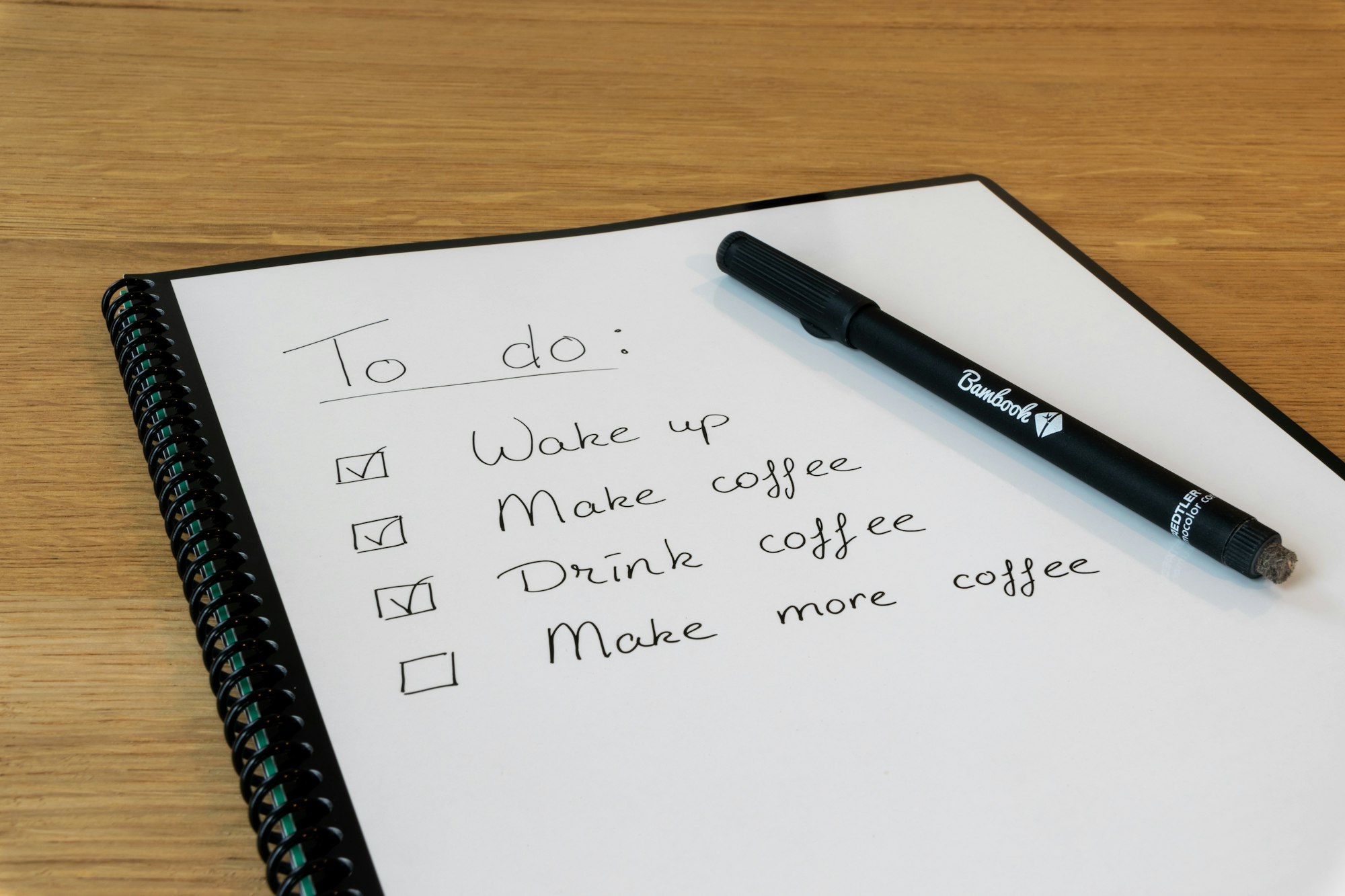
Everyone agrees: keep a to-do list and you’ll get more done. It’s the productivity equivalent of universal advice. Except there’s a problem nobody wants to admit. Your to-do list might be the reason you’re accomplishing less, not more.
I’m not saying lists are useless. I’m saying most people use them as a dumping ground instead of a decision-making tool. And that’s where everything falls apart.
The Hidden Cost of Unfiltered Lists
Here’s what works about lists: they get things out of your head and into a system. Your brain stops spinning trying to remember everything, and you can focus on actual work. That’s real, and it matters.
But then you keep adding to the list. Every thought, task, and obligation gets dumped in. Email that mentions a thing you should remember someday? Add it. Random project idea from a podcast? Add it. That thing your friend mentioned you might want to try? Add it.
Your list becomes a psychological weight instead of a practical tool.
This is where psychology turns against you. The Zeigarnik effect means your brain remembers incomplete tasks better than completed ones. An 47-item to-do list isn’t motivating—it’s your brain in constant background anxiety. You’re never going to finish a list that size, which means you’re living with permanent cognitive itch.
Worse, decision fatigue kicks in immediately. With 15+ things to do, you don’t start with the most important one. You start with the easiest, smallest, most visible one. You reply to three emails, organize your files, fix a typo in a document. You feel productive, you check things off, and you convince yourself you’re making progress.
Meanwhile, the work that actually matters sits at the bottom of the list, collecting dust.
The Illusion of Productivity
Adding a task to your list feels productive. You’ve captured the thing, solved the problem of remembering it. But solving the problem of remembering something isn’t the same as doing it. Most people mistake list-making for action.
This is why some people are buried in tasks yet have nothing to show for their effort. They’re maintaining the list, not the work.
The real trap: An unfiltered list has zero decision-making value. It tells you everything you should do. It tells you nothing about what you should do today—which means every morning you’re starting from scratch, re-deciding what matters. That burns willpower before you even begin.
What Actually Works Instead
Here’s the coaching part: you don’t need to abandon lists. You need to filter them.
The problem isn’t that you’re tracking too much. The problem is that you’re treating all items as equals. Not all tasks matter the same. Not all tasks have the same deadline. Not all tasks deserve your limited attention.
The 1-3-5 Rule (Pick Your Day)
Pick one big task, three medium tasks, and five small tasks for the day. That’s your entire list. Not tomorrow’s list, not this week’s—today’s.
Everything else can wait, move to tomorrow, or move to “someday.”
Why this works: Your brain isn’t overwhelmed, you have a clear win condition (finish your 1, 3, and 5), and you’re forced to prioritize ruthlessly. No more pretending you’re going to do 15 things today.
The Must/Should/Could Framework (For Weekly Planning)
Start your week by sorting everything into three categories:
Must do — Tasks with real consequences if you don’t do them. A client deadline. A commitment you made. Bills that need paying. This list should be short. If everything is “must do,” nothing is.
Should do — Things that matter to your goals but don’t have consequences this week. Routine maintenance. Habit building. Projects moving at their own pace. This list can be longer.
Could do — Nice-to-haves, ideas, things you’d do if you had extra time. Put them here and stop pretending they’re urgent.
Then each day, pull 1-3 things from “must,” and fill the rest from “should.” Don’t touch “could” until your other lists are actually empty.
Time-Block Your Top Three (Do This Today)
Before you look at your list, block time for your three highest-impact tasks. Literally put them on the calendar with start and end times. Make them impossible to forget or skip.
This sounds simple, but it changes everything. A task on your to-do list is a suggestion. A task on your calendar is an appointment.
The Real Verdict
Your to-do list isn’t the problem. Unfiltered lists are. The moment you’re tracking everything without filtering, you’ve lost the tool’s purpose.
A good to-do list serves one job: tell you what to do next. If your list can’t do that—if you have to read 30 items to figure out what actually matters—it’s not helping. It’s just reminding you of everything you’re not doing.
The fix is simple: Stop using your list to capture everything. Use it to capture possibilities. Keep a separate place for those—a notes file, a random ideas doc, whatever. Review it monthly if you want.
Your actual to-do list should contain only items you’ve decided to do. Not maybes. Not somedays. Items you’re committing to.
Start there. Filter ruthlessly. Time-block the top three. You’ll get more done this week than you have in months—not because you have more things to do, but because you finally know which things matter.
If you’re still struggling with what actually deserves your time in the first place, check out how to make decisions faster with less regret—it’s the first step before you build any list. Once you know your priorities, these frameworks turn them into action.
Want to go deeper? Read about productivity systems that actually stick for a full strategy on capturing, filtering, and executing across your entire workflow. Or learn the focus system that works without willpower if your problem isn’t the list—it’s staying on task once you know what matters.