books
Books That Quietly Changed How I Work
February 9, 2026
The best books aren't the ones everyone's talking about. They're the ones that rewire how you actually think and work—sometimes years after you've closed them.
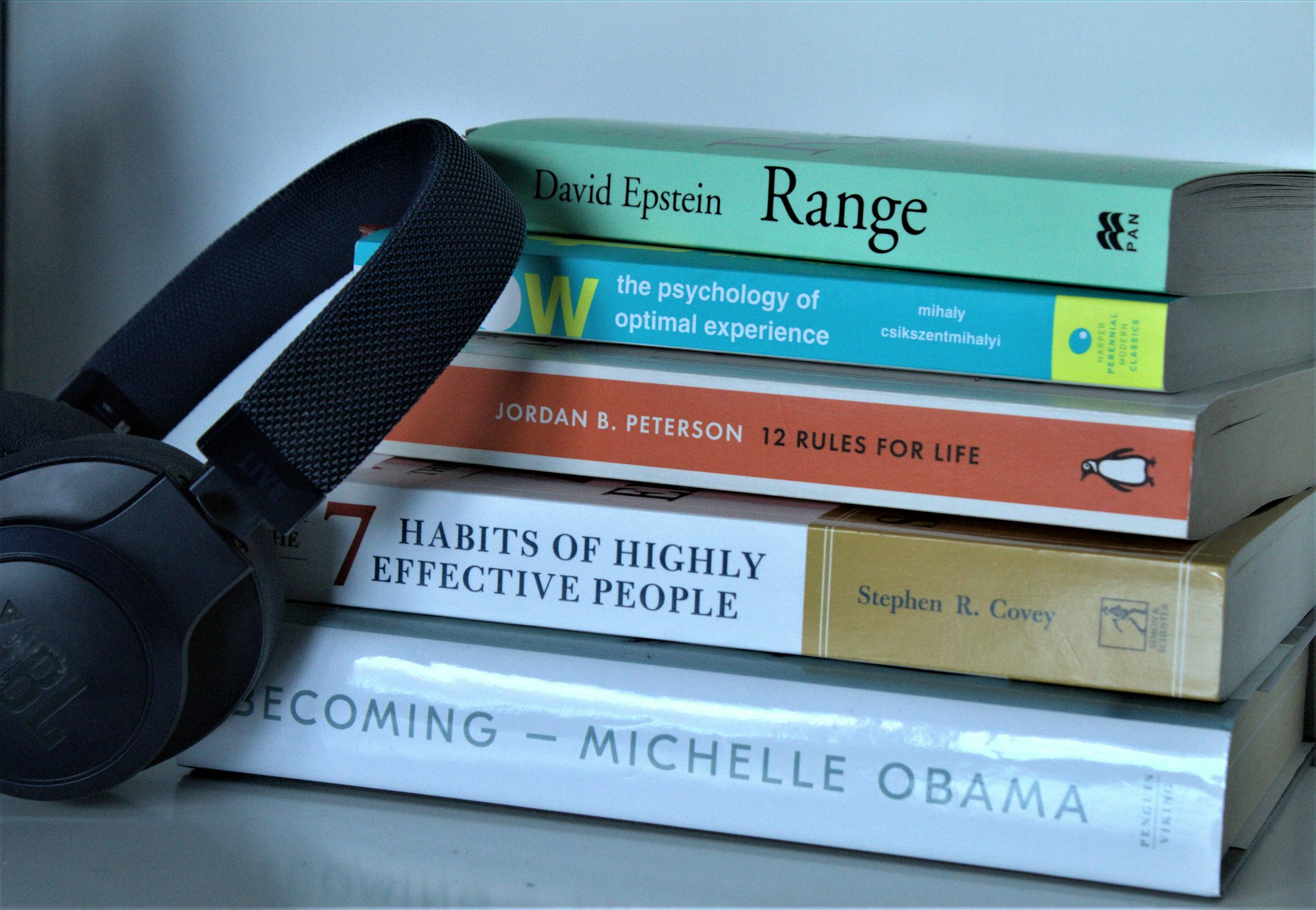
The books that change you aren’t always the obvious ones. They’re not the bestsellers with the motivational covers or the ones everyone recommends at dinner parties. They’re the quiet reads that sit with you—that rewire something fundamental about how you approach work, decisions, and what actually matters.
I’ve read a lot of productivity books. Most of them are forgettable. But a few have become part of my operating system. Not because they told me to work harder, but because they gave me new frameworks for thinking. Here are the ones that actually stuck.
The Checklist Manifesto: Systems Over Heroics
Atul Gawande’s book hit differently than I expected. I picked it up thinking it’d be another lightweight productivity hack about to-do lists. Instead, it’s a rigorous argument for how checklists prevent failure in high-stakes environments—surgery rooms, aviation, disaster response.
The shift happened when I realized I was treating complexity like it required brilliance. I thought good work came from having a sharp mind on call 24/7. But Gawande’s argument is subtly radical: the smartest people fail at complex tasks because they skip steps or assume they won’t forget the obvious. A well-designed checklist doesn’t insult your intelligence—it protects you from yourself.
I started building checklists for recurring work. Not because I’m forgetful, but because it freed my brain to focus on the hard parts instead of holding mental lists. For client onboarding, for launching posts, for feedback cycles—simple checklists. The result wasn’t just fewer mistakes. It was the ability to think clearly on the important decisions because I wasn’t half-managing logistics.
Who it’s really for: Anyone who’s made the same mistake twice and called it “experience.” Freelancers, team leads, anyone managing multiple projects.
Thinking in Bets: How Uncertainty Actually Works
Annie Duke’s book rewired how I make decisions. She’s a former professional poker player, and the lens matters. Poker is the anti-certain world—you make decisions with incomplete information, outcomes sometimes prove you wrong even when the decision was right, and hindsight bias will destroy your judgment if you let it.
The game-changer: separating decision quality from outcome quality. I used to evaluate my choices based on results. Good outcome = good decision. Bad outcome = bad decision. But that’s backward. You can make a great decision that lands poorly, and a reckless choice that happens to work out. We only see the outcome, so we draw the wrong lessons.
I started writing down my reasoning before making big calls—not as perfectionism, but as a decision journal. When something didn’t work, I could check if I’d reasoned well given what I knew at the time. Suddenly I stopped over-correcting based on random bad luck. And I stopped getting cocky when I got lucky. The decisions actually improved because I was learning from patterns, not noise.
Who it’s really for: People who second-guess themselves constantly. Anyone making decisions under uncertainty (which is everyone).
Range: Why Generalists Win
David Epstein’s book arrived when I was wrestling with focus vs. breadth. The productivity world screams: specialize, go deep, be an expert. Pick a lane and stay in it.
Epstein’s research says that’s partly wrong—or at least incomplete. The most innovative, adaptable people tend to have range. They’ve played in multiple domains. They know enough about different fields to spot connections others miss. The world rewards specialists in stable environments and generalists in changing ones.
I’d been forcing myself into a narrow box. Write about productivity, nothing else. Build this skill, ignore that. But my best ideas came from reading widely—mixing psychology with writing with business with neuroscience. I gave myself permission to follow intellectual interests that didn’t “make sense” for my brand, and the work actually got better. Cross-pollination isn’t distraction. It’s how you see around corners.
Who it’s really for: Anyone told they’re “unfocused” but whose weirdest strengths come from connecting different worlds. People building something in a changing field.
The War of Art: Shipping Beats Perfection
Steven Pressfield’s slim book hit like a gut punch. It’s about Resistance—the force that keeps you from doing the work. Not external resistance. Internal. The voice that says “not yet” and “you need to be ready” and “this isn’t good enough.”
I read it during a period where I was rewriting the same post four times, researching instead of writing, preparing instead of launching. Pressfield’s argument is unforgiving: Resistance grows stronger when you feed it with delay. The work doesn’t become ready by waiting. It becomes ready by shipping.
I started publishing rougher drafts. Editing in production. Asking for feedback earlier. The writing improved faster than it ever had when I was perfecting in private. Done beats perfect. Shipping unblocks your next work.
Who it’s really for: Perfectionists stuck in the beginning stage. Anyone whose standards are paralyzing them.
Stumbling on Happiness: Your Intuition About What You Want Is Often Wrong
Daniel Gilbert’s book is technically about happiness science, but it’s really about how badly we predict what will make us happy. We imagine futures that are wrong. We chase things that won’t actually satisfy us. We’re terrible at learning from others’ experience because we think we’re special.
The work impact: I stopped trusting my instincts about what projects would feel good. Instead of assuming a high-paying gig would make me satisfied, I checked my assumptions. I ran small experiments. I asked people doing similar work how it actually felt. This saved me from pursuing several lucrative dead ends that would’ve left me drained.
It also made me more thoughtful about what I recommended to other people. When someone said they’d feel better if they just ____, I knew they were probably wrong. We’re all worse at predicting our own satisfaction than we think.
Who it’s really for: Anyone making big changes or big decisions based on how they imagine the outcome will feel.
Deep Work: What We’ve Lost to Distraction
Cal Newport’s book came out ten years ago, but it’s not about productivity tips—it’s about what shallow work costs you. Not just in output, but in your ability to think at all. Attention is eroding. Real, hard cognitive work is rare and valuable. Everyone’s competing for your focus because focused attention is scarcer than ever.
I realized I’d let context-switching become my default. Email, Slack, then an hour of real work, then back to interruptions. By the time I returned to thinking deeply, the thread was gone. Newport’s argument about building deep work rituals—uninterrupted blocks, removal of the distractions—seemed almost luxurious. Unaffordable. But I tried it anyway.
The change was immediate and felt unfair. Three hours without notifications and I’d move further on a project than I had in a week of fragmented effort. I built my schedule around this. Mornings for deep work, windows fully closed, phone in another room. The work itself became better because thinking became possible.
Who it’s really for: Anyone who feels perpetually behind despite working constantly. Knowledge workers drowning in interruptions.
The Pattern
These books didn’t teach me productivity hacks. They rewired my thinking. They gave me new frameworks for understanding how work actually happens—the psychology of decisions, the cost of distraction, the danger of perfectionism, the power of systems, the value of range.
The common thread: they all pushed against something I believed, and they were right to push. I was wrong about heroics, about knowing what I wanted, about decision quality, about how much specialization actually served me, about the math on perfection.
That’s the mark of a book that changes how you work. It’s not comfortable. It contradicts something you’ve built your habits around. But when you follow it, the work gets better. The thinking gets clearer. Things that felt impossibly hard become tractable.
If you’re deep in books you reread every year, these might sit differently with you on a second pass. And if you’re suspicious of the self-help category altogether, try the books that help you think better instead of just feel better. There’s a difference.
The best books aren’t the ones you finish. They’re the ones that change how you work after you’ve forgotten you read them.