Books
Books to Reread: Three Ways to Revisit an Idea
Revisit books on meaning, creativity, and long-term thinking with specific questions. Compare the text with your own notes instead of a checklist.
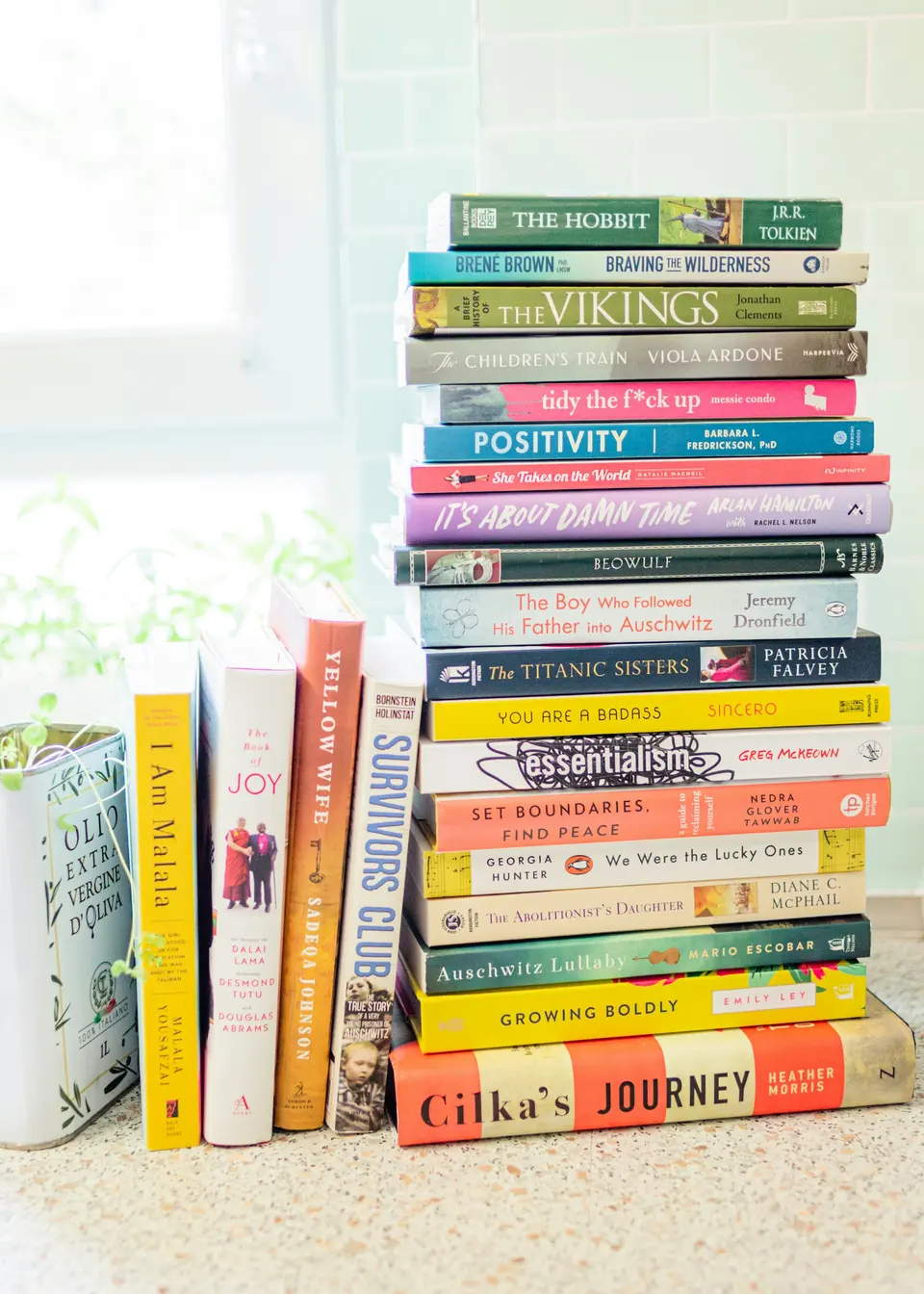
Reread a book when you have a reason to return to it: a question, a disagreement, or a passage you want to understand better. An annual schedule is optional. Familiarity alone does not prove that you have understood or applied the argument.
Correction, September 22, 2026: The claimed annual rereading habit and personal life changes were invented. This is a source-based reading shortlist, not a firsthand account of reading the complete books.
The descriptions below use publisher and author material. The reading questions are PickyFox editorial suggestions, not quotations, validated exercises, or the authors’ prescribed routines.
Man’s Search for Meaning, by Viktor E. Frankl
Beacon Press describes a book connecting Frankl’s account of Nazi concentration camps with his discussion of meaning and logotherapy. Read it with attention to that historical context.
A rereading question: Which part of the text is testimony, which is a psychological argument, and which is your own interpretation? Keep those categories separate in your notes.
Do not turn another person’s suffering into a device for dismissing your own or someone else’s difficulties. This book is not evidence that distress reflects a failure to find meaning, or a replacement for appropriate care.
Finite and Infinite Games, by James P. Carse
The publisher’s description presents a philosophical distinction between contests aimed at winning and forms of play aimed at continuing.
A rereading question: Where does this distinction illuminate your current project, and where does it oversimplify it? A continuing creative practice can still include a finite deadline, a limited budget, or a contract you must complete.
Treat the distinction as a lens to examine, not a universal rule that every commitment should stay open forever. A useful reread can end in disagreement.
Steal Like an Artist, by Austin Kleon
Kleon’s book page introduces a creativity guide concerned with influence and making work. It is a candidate when you want to reconsider how you learn from other creators.
A rereading question: Can you identify a specific influence, explain what you learned from it, and show what is different in your own work?
Keep attribution and permissions in view. The title does not grant a license to copy protected work, claim another person’s results, or present a close imitation as an original achievement.
Keep a small comparison record
Before returning to a chapter, write what you think it says. After reading, note the passage or page that supports or contradicts that memory. Add one question you still cannot answer.
If you try an idea, distinguish the book’s proposition from your experiment. Record the situation and result without claiming the book caused every change. You can also reread purely for enjoyment; application is not a condition of legitimate reading.
For related choices, see books about thinking and books about creativity. Pick one passage worth revisiting before building another ambitious reading list.
Advertisement