timeless-lessons
The Case for Paper in a Digital World
February 6, 2026
I used to think digital was the only way. Then I realized my best ideas were happening on paper. This isn't about being anti-tech—it's about what actually works.
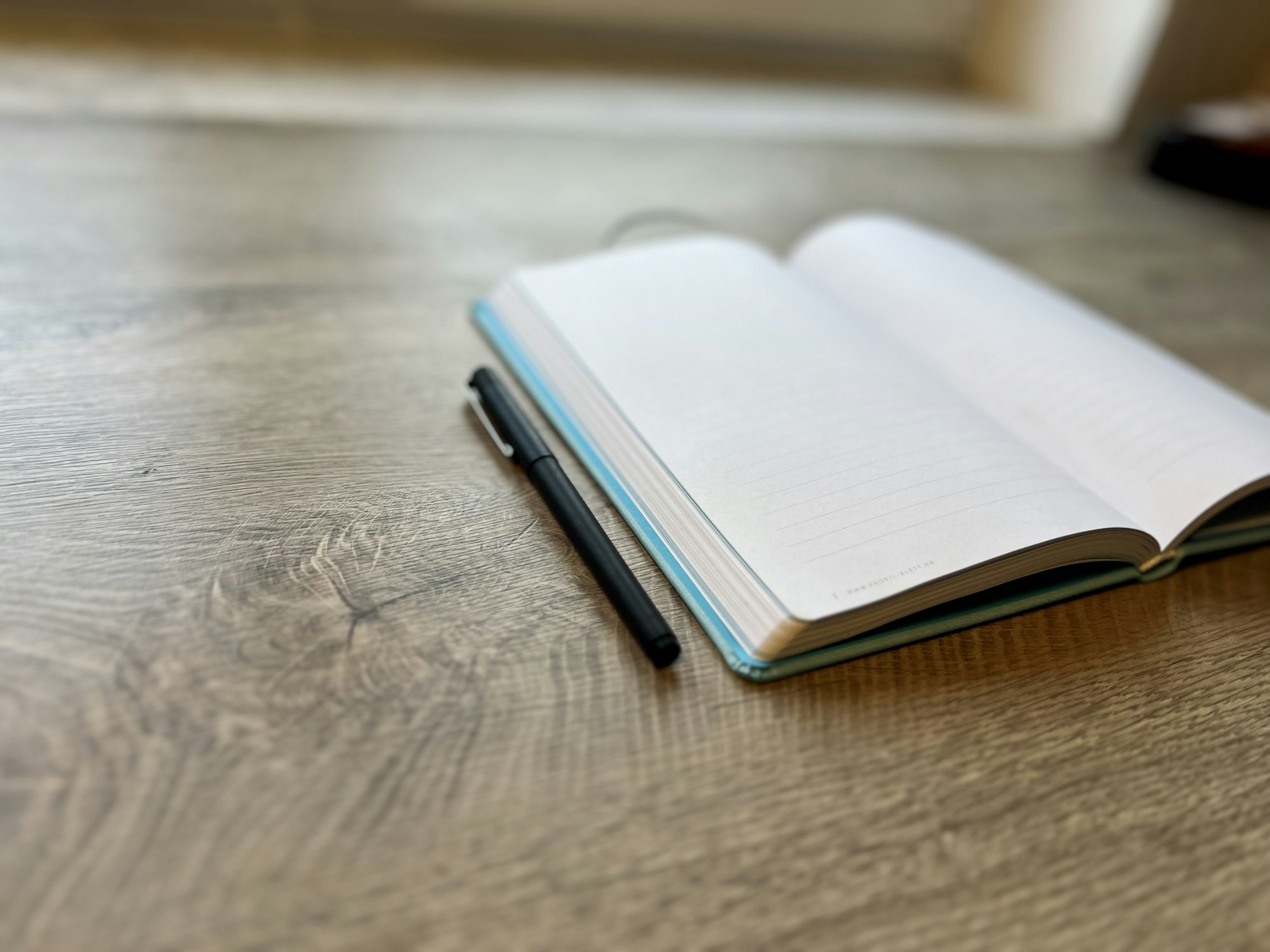
I’ve spent the last five years convinced that the digital answer was always the right one. Cloud sync, searchability, backup everything. I loaded my notes into every app I could find—Notion, Obsidian, Apple Notes. The logic was airtight: why wouldn’t you want your thoughts accessible from anywhere, at any time, perfectly organized and cross-linked?
Then I stopped getting my best ideas in those apps.
It crept up on me slowly. I’d sit down with my phone or laptop to capture something important, and instead I’d end up scrolling, context-switching, or watching some notification pull my attention sideways. The friction I thought I was eliminating? Turns out I needed it.
The first time I grabbed a physical notebook out of frustration—literally just to avoid the digital distraction—something shifted. I wrote faster. The ideas came cleaner. There was no urge to organize mid-thought, no browser tab tempting me, no notification glowing in the corner. Just me and the page.
I’m not going to pretend this is some profound discovery. People have been saying this for years. But I had to learn it myself because I was too smart for my own advice. I kept thinking about all the things I was “losing” by using paper: searchability, portability, redundancy. What I wasn’t thinking about was what I was gaining: a thinking process that actually worked.
The thing about handwriting is that it forces you to be selective. You can’t type as fast as you think, which means you’re constantly distilling. That’s not a limitation—it’s a feature. By the time something hits the page, you’ve already filtered it through a few mental iterations. The bad ideas fall away. The ones that survive are usually worth keeping.
There’s also something about the tactile feedback—the weight of the pen, the texture of paper, the physical evidence of your thinking accumulating on the page—that feels like it engages a different part of your brain. I’m hesitant to get too mystical about this because I don’t have neuroscience backing me up, but I know it works differently than typing. The permanence matters. You can’t endlessly delete and rearrange. You’re committed to the mark.
Digital tools are incredible for other things. For organizing what you’ve already thought about, for sharing, for retrieving specific information across years of notes—that’s where digital shines. But for the act of thinking itself? For exploring ideas that don’t have shape yet? Paper still wins. I think I was confusing the output with the process. Just because your final thoughts end up in a digital system doesn’t mean they need to be born there.
What’s harder to admit is that I resisted this truth for a while because it felt like admitting defeat. I’d invested so much in setting up the “perfect” digital system. Switching to paper felt like walking backward. But I’ve learned that sometimes the best tools aren’t the newest ones. They’re the ones that actually get out of your way.
My workflow now is hybrid in a way that probably looks weird if you’re obsessed with optimization. I think on paper, capture the raw ideas in a notebook, then transfer the worthwhile bits into a digital system for organization and reference. It adds a step, which means it takes longer. But the quality of the work that comes out the other end is noticeably better.
This isn’t an argument that everyone should ditch their digital tools. It’s an argument that if you’re feeling stuck, distracted, or like your thinking has gotten shallower, it might be worth experimenting with paper again. Not as a replacement for everything, but as a complement to the parts of your process that actually need to be digital.
And if you’re already deep in note-taking apps and wondering if you’re optimizing in the wrong direction, I’d revisit how to build a second brain without losing your first one. The tools matter less than whether they’re actually serving your thinking.
The irony is that acknowledging paper’s strengths doesn’t mean abandoning the benefits of digital. It means being honest about what each one does well. Paper wins at exploration and thinking. Digital wins at organization and retrieval. Use both. Fight the urge to have one system that does everything, because it won’t. Your brain doesn’t work that way, and pretending it does is just friction with extra steps.
I was wrong to assume digital was always the answer. I’m still using digital tools, but I stopped apologizing for the time I spend with a notebook. Some of my clearest work started there, with nothing but a pen and the space to think without interruption. That’s worth protecting.
If you’re curious about the journaling side of this, the journaling method I actually stuck with goes deeper into what a paper practice can look like in daily life. And if you’re still app-shopping, note-taking apps ranked by someone who’s tried too many might save you some time.