Business & Entrepreneurship
Build an Online Presence Without Social Media
Build an online presence without social media by owning a simple home base, proof, email, and a few relationships that actually move.
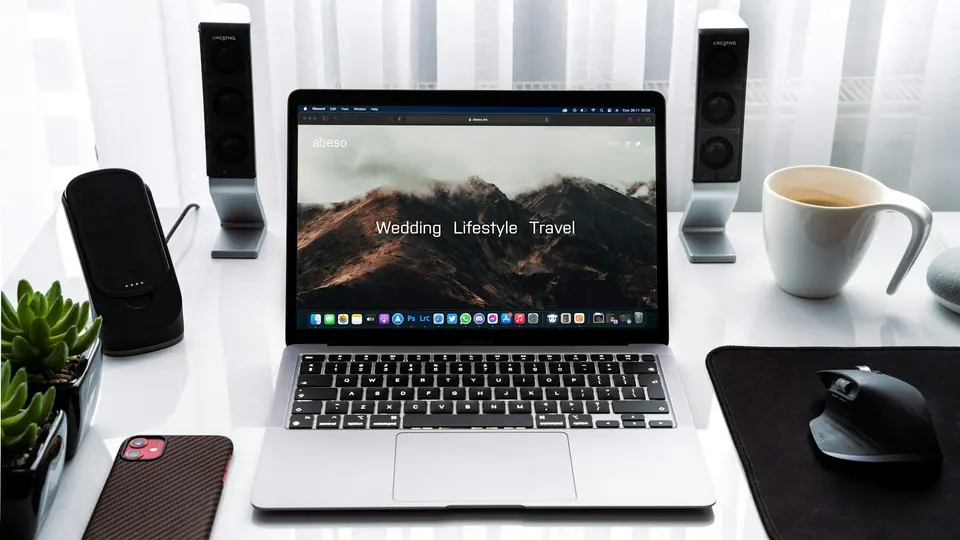
You can build an online presence without social media.
The internet will act like this is illegal.
It is not.
You do not need to post daily.
You do not need to become a motivational carousel factory.
You do not need to share your breakfast, your trauma, and your fake hot takes because some growth account told you visibility requires “showing up.”
You need three things:
- a place people can find you
- proof you can help
- a way for the right people to contact you
That is an online presence.
Not fame.
Presence.
Stop confusing audience with access
Social media gives you borrowed access.
A platform lets you reach people until it changes the rules, buries your post, bans a format, rewards noise, or decides your perfectly useful thing is less interesting than a dancing finance bro.
Lovely system.
Build on it if you want.
But do not confuse it with ownership.
The move: Put your real base somewhere you control.
That means:
- your website
- your email list
- your portfolio
- your search-friendly articles
- your direct relationships
Social can be a hallway.
Do not make it the house.
Build the boring home base first
Your website does not need to be fancy.
It needs to answer four questions fast:
- Who are you?
- Who do you help?
- What problem do you solve?
- How can someone take the next step?
That is it.
Required pages:
- Home: clear promise, not a fog machine
- About: credibility and personality, not a childhood memoir
- Work or Services: what you do and who it is for
- Proof: case studies, samples, testimonials, results
- Contact: one obvious way to reach you
If you are building a service business, your website is not a brochure.
It is a sorting machine.
It should pull the right people closer and let the wrong people leave peacefully.
If the issue is how to describe yourself without sounding fake, building a personal brand from scratch is the deeper companion.
Put proof where people can inspect it
Claims are cheap.
Proof is harder.
Most people say:
I help businesses grow with strategic content.
Fine. Everyone says something like that.
Better proof:
- a before-and-after rewrite
- a case study
- a teardown
- a sample project
- a short article solving a real problem
- a screenshot with permission
- a clear explanation of your process
The move: Create three proof assets.
Not twenty.
Three.
Example:
- one case study
- one strong sample
- one article that teaches a useful idea
If you are new and do not have clients yet, use a self-directed project. Show how you think. Show the work. Do not hide behind “I am still building my portfolio” forever.
For freelancers, how to build a portfolio with no experience goes deeper on that exact problem.
Use email because it is boring and powerful
Email is not glamorous.
Good.
Glamour is usually where the nonsense enters.
An email list gives you a direct line to people who asked to hear from you. No feed. No reach panic. No praying the platform feels generous today.
You do not need a giant newsletter.
Start with:
- one useful idea per week
- one clear topic area
- one simple signup form on your site
- one reason people should stay subscribed
Do not write “news and updates.”
Nobody wants news and updates from someone they barely know.
Write something useful.
Example:
One practical note every Friday for freelancers trying to get better clients without becoming internet clowns.
That is a reason.
Be useful where your people already gather
You do not have to post on social media to participate online.
Find the rooms where your people ask real questions.
Options:
- niche forums
- industry communities
- newsletters with reply threads
- Slack or Discord groups
- local business groups
- guest posts
- podcasts
- partner newsletters
The rule:
Help first. Mention your work only when it fits.
If you show up in a community and immediately start self-promoting, everyone can smell it.
Answer questions.
Share useful examples.
Make introductions.
Become memorable for being helpful, not loud.
If clients are the goal, how to find freelance clients without job boards is the next step after your base is built.
Pick one discovery channel
Do not try to build search, email, partnerships, podcasts, guest posts, referrals, and community presence in the same week.
That is not a strategy.
That is panic wearing a calendar.
Pick one discovery channel for 90 days:
- Search: write useful articles people can find
- Referral: build relationships with adjacent service providers
- Community: become active in one serious group
- Guesting: appear on podcasts, newsletters, or blogs
- Direct outreach: send careful, specific emails to likely clients
One channel.
Ninety days.
Track whether it creates conversations with the right people.
Not likes.
Conversations.
The 7-day anti-social setup
Do this before you open another social media strategy thread.
Day 1: write the one-line positioning
I help [person] solve [problem] without [pain].
Ugly is fine.
Day 2: create the home page
Clear promise. Clear next step.
Day 3: add proof
One sample, case study, or teardown.
Day 4: add contact
Make it painfully obvious.
Day 5: add email signup
Simple promise. No fancy funnel.
Day 6: choose one discovery channel
Only one.
Day 7: make the first useful artifact
Article, guide, teardown, checklist, or pitch.
Publish it.
What to measure
Ignore:
- follower count
- impressions
- random traffic
- vague “visibility”
Track:
- qualified inquiries
- email replies
- referral conversations
- search clicks from relevant topics
- people who say “I read your thing and…”
That last one matters.
It means your presence is doing its job.
You do not need to be everywhere.
You need to be clear somewhere.
Build the base.
Add proof.
Choose one discovery path.
Let social media be optional, not oxygen.
Advertisement