Timeless Lessons
The Case for Paper in a Digital World
Paper still wins for messy thinking. Digital wins for storage, search, and sharing. Stop forcing one tool to do both jobs.
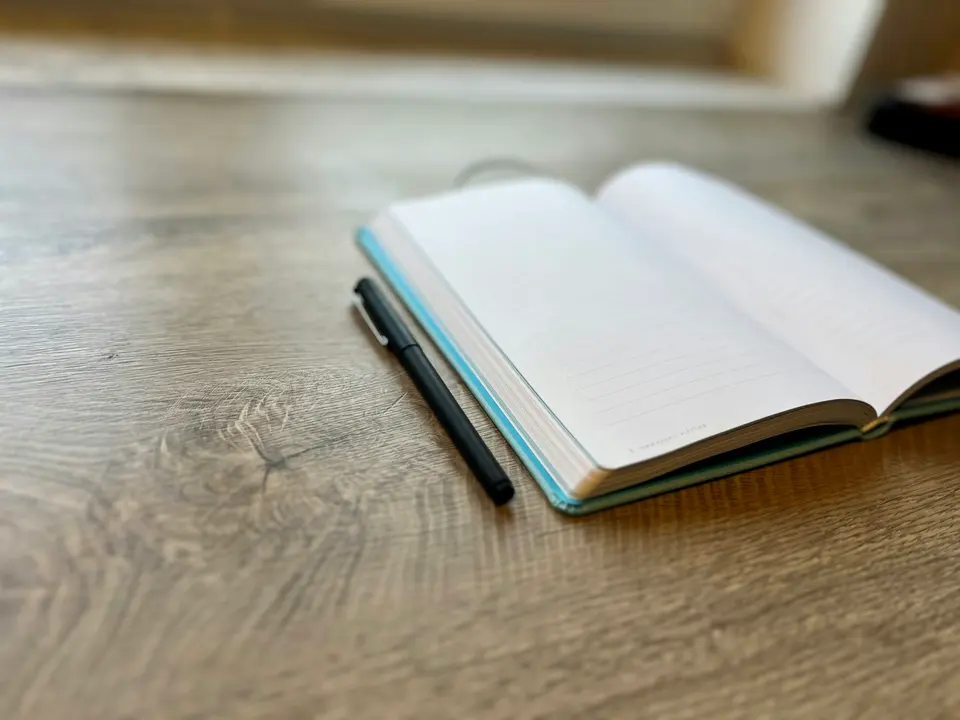
Paper is not dead.
You are just embarrassed that the cheap notebook keeps beating your expensive note app.
I get it.
Digital looks smarter.
Searchable.
Synced.
Tagged.
Backed up.
Connected to seven other apps you keep promising yourself you will use properly.
Beautiful.
Also distracting.
Paper has one unfair advantage:
It does not want anything from you.
No notification.
No template.
No sidebar.
No “quick” check of something unrelated.
Just the page.
Sometimes that is the whole cure.
Use paper for thinking
Paper is good when the idea is still messy.
Use it for:
- Rough outlines
- Problem framing
- Morning brain dumps
- Decision maps
- First drafts
- Meeting notes you need to understand, not archive
- Planning a hard conversation
- Untangling a stuck project
The move: Use paper before the idea has a shape.
Digital is good once the idea has a shape.
Do not reverse that order unless you enjoy reorganizing chaos.
Why paper works
Paper slows you down.
Good.
Your brain does not need more speed when the work is unclear.
It needs friction.
Useful friction.
When you write by hand, you cannot capture every thought.
So you choose.
You compress.
You cross out.
You draw a bad arrow.
You notice the part that actually matters.
That little delay is not a defect.
It is the thinking.
Typing can become transcription.
Paper forces interpretation.
Use digital for storage
Do not become a paper purist.
That is just another costume.
Digital is better for:
- Search
- Archives
- Sharing
- Long-term reference
- Version control
- Team work
- Reusable templates
- Anything you need later and cannot trust your bookshelf to remember
The clean split is:
Paper for forming thoughts. Digital for keeping thoughts.
That is it.
If your digital notes are already a landfill, the second brain guide is the deeper cleanup. But do not use that as an excuse to redesign your whole life before writing the next ugly page.
The hybrid workflow
Try this for one week.
Step 1: Start hard thinking on paper
When you begin a messy task, open a notebook before opening the laptop.
Write:
- What am I trying to solve?
- What do I already know?
- What is confusing?
- What is the next visible move?
Five minutes.
No app.
Step 2: Circle only the useful bits
Do not digitize everything.
That is how you create a second inbox with nicer handwriting.
Circle:
- Decisions
- Next actions
- Phrases worth keeping
- Questions to answer
- Ideas you will actually use
Leave the rest on paper.
Not every thought needs citizenship.
Step 3: Transfer only what earns it
Move the useful bits into your digital system.
Examples:
- A task goes into your task manager.
- A decision goes into the project doc.
- A good line goes into the draft.
- A reference goes into your notes.
The notebook is not the archive.
It is the workshop.
Workshops are allowed to be messy.
Where people ruin paper
They try to make the notebook perfect.
Wrong.
The notebook is not a productivity aesthetic.
It is a thinking surface.
Do not waste time with:
- Color systems you will abandon
- Indexes you will never maintain
- Fancy layouts that make you afraid to write
- A pen ritual that somehow requires 40 minutes
- Perfect handwriting nobody asked for
Use the notebook like a tool, not a shrine.
If journaling is the part you actually want, a simple three-line journaling method is the cleaner path.
When paper is the wrong tool
Paper is bad when:
- Other people need access
- You need search
- You need reminders
- You need repeatable templates
- You need calculations
- The information must survive travel, coffee, or your own chaos
Do not put your entire business memory in one notebook and then act surprised when it becomes a hostage situation.
Paper is for the front edge of thinking.
Digital is for the durable parts.
Use the right tool at the right stage.
The test
For the next seven days, use paper for the first five minutes of any important work.
Before writing the email.
Before building the outline.
Before planning the week.
Before solving the client problem.
Ask:
What is the actual thing I am trying to decide?
Then write until the fog thins.
After a week, notice the difference.
Not in vibes.
In output.
Are your drafts cleaner?
Are your decisions faster?
Are you opening fewer tabs?
Are you reorganizing less?
If yes, keep paper in the process.
If no, fine.
But do the test before declaring the notebook outdated.
Some tools survive because they work.
Paper is one of them.
Advertisement