Tools & Resources

The One Spreadsheet That Runs My Business

June 3, 2026

A simple financial dashboard that replaced dozens of tools, spreadsheets, and panic. Here's what changed.

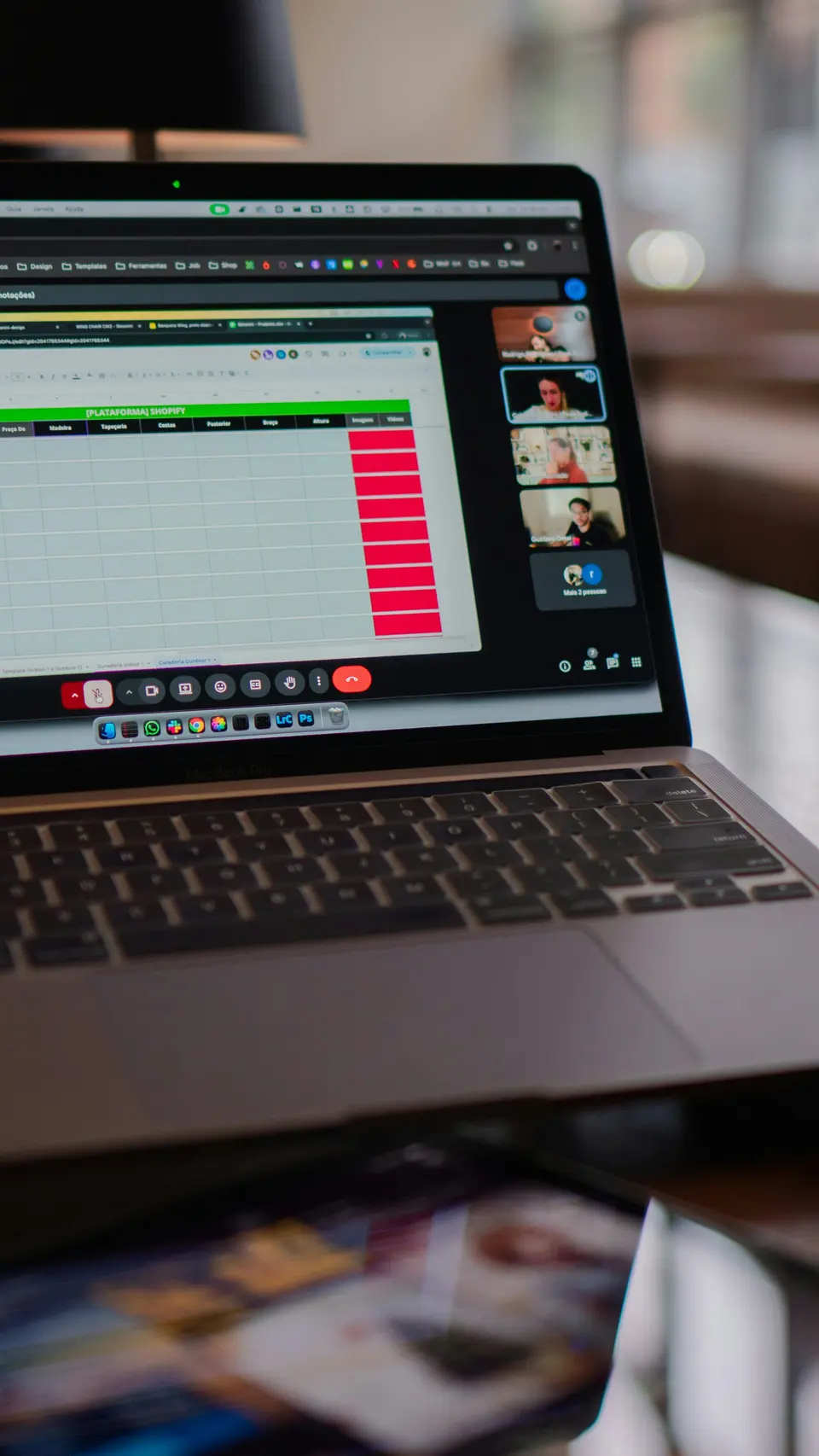
Laptop screen showing a video conference and spreadsheet
Photo by Rodrigo Rodrigues / Unsplash

I remember the moment it clicked. I was three years into running my business, sitting at my desk at 11 PM on a Tuesday, pulling numbers from four different places: a Google Sheet for invoices, a separate one for expenses, another tracking when clients paid (or didn’t), and a half-broken spreadsheet in Notion that I’d abandoned weeks earlier. I was trying to figure out if I’d made money that month. That should be a simple question. It took me forty minutes to find the answer.

The next morning, I threw it all out. Not the business. Just the chaos. I built one spreadsheet, a real one, and everything changed.

This isn’t a fancy solution. There’s no AI. No automation wizardry. No four-part video tutorial. It’s a spreadsheet you could rebuild in an afternoon, and yet it became the single most important tool I use to run the whole operation. Not my calendar. Not my CRM. Not my invoicing software. The sheet.

The Breaking Point

Here’s the thing about running a solo business: you’re always operating with incomplete information. You feel busy, but you don’t actually know if you’re making money. You take on clients because you need to, not because you have any sense of whether they’re actually profitable for you. You can’t tell if you’re working too much or not enough because you don’t have a single place that tells the story.

I’d bought into the idea that I needed specialized tools. An invoicing app. An accounting dashboard. Maybe a project management system just to be safe. Each one promised to solve a problem I didn’t realize I had. Each one created three more. One app would break, I’d replace it with another, and suddenly I was rebuilding every process again. The setup time was eating the time I was supposed to be saving.

The real problem wasn’t that my numbers were scattered. It was that I couldn’t see them together. I couldn’t see the arc.

Building It

The spreadsheet is simple. It has five sections, and I touch it every Friday morning for about 15 minutes.

The ledger. Every single transaction. Money in, money out. I pull this directly from my bank exports. It’s every client payment, every expense, every transfer. No guessing. No “I think I spent money on that.” The system is: if it hit the bank account, it goes in the sheet. Everything else is noise.

Monthly snapshot. This is the piece that actually changed how I think about the business. Each month has three numbers: total revenue, total expenses, what’s left. I used to know the first one pretty well. I had no idea about the second. That’s where most small business owners get surprised. They confuse activity with profit. This section forced me to stop pretending.

Client breakdown. For every active client, I track: revenue this year, rate per hour (or project), hours spent (estimated or actual, depending on the kind of work), and profitability. This is where I learned who was actually making me money and who was making me stressed. One client paid a lower rate but took 30% fewer hours because the work was clearly defined. Another paid well but every project spiraled into scope creep and burnout. The numbers told a story my gut already knew but my brain was afraid to admit.

Cash flow calendar. This one’s a lifesaver. It’s a rolling six-month view of when I expect money to land versus when it actually lands. Big clients pay on net-30. Some pay on net-60. One pays on net-90 but the rate is high enough to be worth it. Knowing that I have a gap between September invoicing and November cash means I can actually plan instead of panic.

The goals section. Revenue target for the year. How much I’m tracking toward it. What the gap looks like. It’s not motivational poster stuff. It’s just: this is what I said I wanted, this is where I’m at, this is what needs to happen between now and then. Sometimes that means taking on more work. Sometimes it means raising rates. Sometimes it means accepting that I’m already ahead and can coast for a quarter.

The whole thing is one dashboard. The data’s all there, the relationships are visible, and every Friday I get a 15-minute window into the actual health of the business.

What Changed

The first thing that shifted was my confidence in saying no. I used to take on every client who asked because I couldn’t afford to turn down money. Then I ran the numbers properly. I realized that my lowest-paying client was actually costing me time I could spend on higher-paying work. The accounting was painful, but the decision after was clean. Within a month, my hourly rate went up 30% just by removing the drag.

The second thing was predictability. I knew in July what September looked like. I could see seasonality. I could see which types of projects were actually worth my time after accounting for email overhead and revision rounds. Most importantly, I stopped getting shocked on the 15th of the month when I didn’t have the cash I thought I had.

The third thing was almost accidental: it became a way to talk to myself. Every Friday, I’m not just checking in. I’m having a conversation with the data. Why did that month dip? What changed when it picked up? These patterns only become visible when you’re looking at a complete picture, not four separate spreadsheets that never talk to each other.

It also gave me something I didn’t expect: proof. When I started thinking about hiring, I could point to concrete data about where my time actually went. When I considered which services to offer, I could see which ones were actually profitable versus which ones just looked impressive. I stopped making decisions based on assumptions and started making them based on facts that I’d verified every single Friday for two years.

Why This Works

The spreadsheet works because it forces a weekly conversation you can’t skip. An app you set up and never touch again is worse than useless. It’s an illusion of control. The spreadsheet requires just enough friction that I actually look at it, and just enough speed that I look at it weekly instead of quarterly.

It also works because it’s ugly enough to stay simple. If it were prettier, I’d probably keep adding features. I’d probably make a chart about seasonal trends and another section tracking some metric I don’t actually need. The fact that it’s just organized data means I can maintain it without getting lost in the tooling.

And it works because I own it completely. If I need to add a field, I add it. If I realize a category doesn’t matter, I delete it. I’m not locked into someone else’s data model. I’m not waiting for a feature request. I’m just building exactly what I need, adjusting it quarterly, and sleeping better on Fridays because I actually know what’s happening.

Most solopreneurs I know are running the same mental accounting I was three years ago: intuition, hope, and spreadsheets scattered across their computer like digital trash. The moment you pull it together into one place you actually look at, the game changes. You go from “I think I’m making money” to “I know exactly how much I’m making, where it’s going, and what I need to do next.”

If you’re trying to dial in your own financial habits that actually moved the needle, this is probably the single most important one. Because you can’t move what you can’t see.

The weird part is how expensive I was with my time while trying to save it. I was spending hours every month fighting with tools that were supposed to simplify my life. The spreadsheet doesn’t ask much of me. Fifteen minutes a week. And somehow that’s the difference between running a business and just keeping one alive.

If you’re thinking about tools for your own operation, the actual tech stack I use for running a one-person business might give you some perspective on what’s actually necessary versus what’s just shiny. And if you’re trying to figure out how to make sense of invoicing without it destroying your soul, I wrote about tools that make invoicing less soul-crushing too.