Career & Work
What Nobody Tells You About Working From Home Long-Term
Working from home long-term gives you freedom, then quietly asks you to rebuild structure, friendship, and endings by yourself.
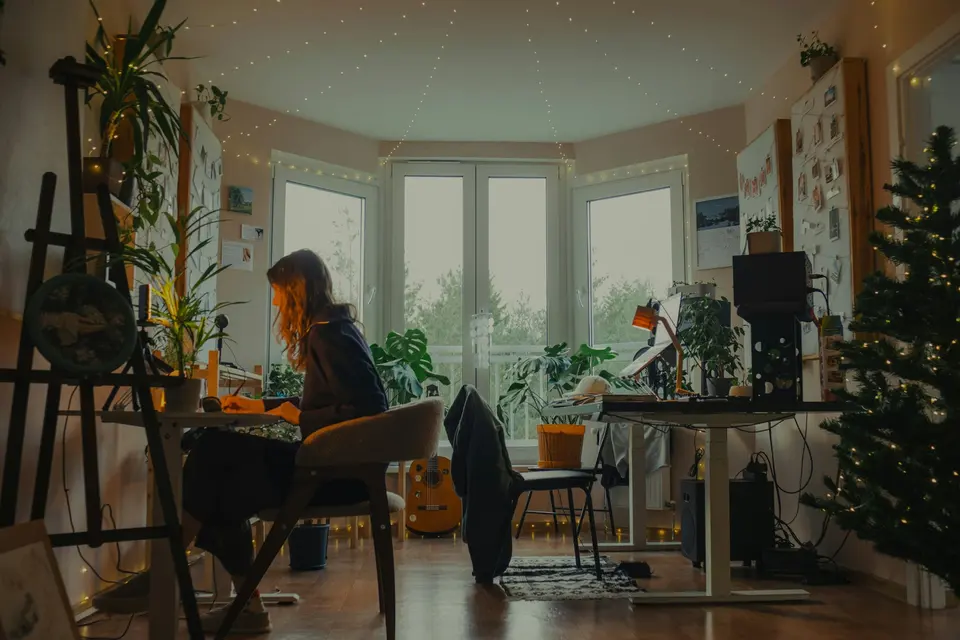
Working from home starts as a gift.
No commute.
No office lighting that makes everyone look mildly haunted.
No one appearing beside your desk with the phrase “quick question,” which is almost never quick and rarely a question.
Then a few years pass.
The gift gets complicated.
You still like the freedom. You may never want the old office life back. But you start noticing the hidden bill:
You have to rebuild structure, connection, and endings yourself.
The office used to provide some of that badly.
Home provides none of it automatically.
The loneliness is not just being alone
The problem: You lose tiny contact.
Not best-friend contact.
Not deep emotional bonding.
The little stuff:
- a joke before a meeting
- someone noticing your haircut
- a quick “does this make sense?”
- lunch noise
- walking past humans who are also having a day
You can hate office small talk and still miss the human texture.
Both can be true.
Remote work often replaces texture with scheduled interaction. Calls have agendas. Messages have purpose. Everything becomes efficient and weirdly thin.
The move: Schedule low-purpose contact.
Yes, it sounds unromantic.
Do it anyway.
- co-work with a friend on video
- take one walking call a week
- work from a cafe sometimes
- join a recurring local thing
- message one person just because
Do not wait until you are lonely enough to make connection feel like emergency repair.
Build it before the wall gets tall.
If basic social muscles feel rusty, the small-talk guide is useful in the least fake way.
The boundary disappears quietly
The problem: Home becomes work-shaped.
Your desk is ten steps away.
Your laptop is right there.
Your messages follow you into dinner.
Nobody has to demand that you stay available. The setup implies it.
This is how people end up half-working all day and never actually resting.
Not because they lack discipline.
Because the room has no off switch.
The move: Create a shutdown ritual that looks almost too obvious.
Try:
- Write tomorrow’s first task.
- Close every work tab.
- Put the laptop away or cover it.
- Change location.
- Say out loud, “Work is done.”
Yes, saying it out loud feels goofy.
Good. Your brain needs a cue stronger than “I guess we are done because I am spiritually mush.”
For the full version, use work-from-home boundaries. Remote work without boundaries becomes one long Tuesday.
Your identity can blur
The problem: You become the worker version of yourself all day.
In an office, there was at least a commute, clothes, a door, a desk, a leaving.
At home, the costume disappears.
Sounds freeing.
Until your whole day becomes one blended person:
- worker
- partner
- parent
- roommate
- cook
- admin department
- exhausted furniture
No transition.
No role change.
No reset.
The move: Add artificial transitions.
Pick two:
- morning walk before work
- different shoes for work hours
- lunch away from the desk
- five-minute tidy after work
- evening walk after shutdown
- music that marks “work starts” and “work ends”
This is not aesthetic nonsense.
Transitions tell your body what mode you are in.
Without them, the day melts.
Availability gets weird
The problem: People think home means reachable.
Sometimes they do not even mean harm.
They just know you are there.
So the quick message arrives.
The quick call appears.
The quick favor wanders in wearing shoes.
Meanwhile, you feel guilty for not answering because you are technically at home.
Stop that.
Home is a location, not an availability policy.
The move: Make response windows explicit.
Use plain language:
I check messages at 11 and 4. If something is urgent, call me.
Or:
I am in focus time until 2. I will reply after that.
People may still interrupt.
Fine.
Repeat the boundary without writing a courtroom defense.
If availability is draining you across work and life, the real cost of always being available is the warning label.
You may miss the office and still not want it back
This is the weird part.
You can miss:
- the commute boundary
- the desk that was not in your house
- the casual friendship
- the coffee routine
- the feeling of leaving work behind
And still not want the office back.
That is not hypocrisy.
That is grief for a structure you did not know was helping.
Do not solve that grief by romanticizing fluorescent lights and bad meetings.
Solve it by rebuilding the useful pieces:
- a leaving ritual
- regular people contact
- a work-only zone
- a start and stop time
- reasons to leave the house
The office was not paradise.
It was scaffolding.
Now you need your own.
The repair plan
Do this this week:
- Pick one shutdown ritual.
- Put one social thing on the calendar.
- Move lunch away from the desk twice.
- Set one message boundary.
- Take one walk before or after work.
Small. Boring. Real.
The fantasy version of working from home sells freedom.
The real version requires maintenance.
You have to protect energy like it is income, because in remote work, it kind of is. Energy management is not a cute side topic here. It is infrastructure.
Working from home long-term can be good.
But it will not stay good by accident.
Build the structure on purpose.
Advertisement