Career & Work
Simple Rituals That Create Work-From-Home Boundaries
Work-from-home boundaries do not require a perfect office. They require clear start, stop, and unavailable signals.
Work-from-home boundaries are easy in advice articles.
Just create a dedicated office.
Just maintain office hours.
Just do not work from bed.
Lovely.
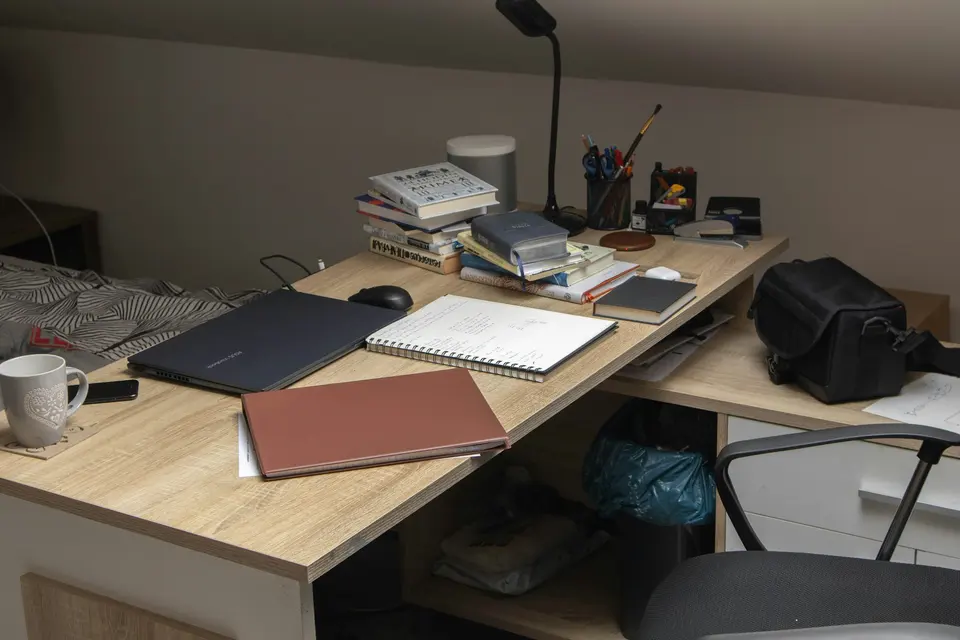
Now back to reality, where your office is a corner, your kitchen table has a laptop scar, and your bedroom has seen too many video calls.
You may not have physical boundaries.
So build ritual boundaries.
Not fancy rituals.
Clear signals.
Your brain needs to know when work starts, when work stops, and when you are not available.
Start work on purpose
The move: Create a five-minute start ritual.
Use the same sequence every workday:
- Clear the surface.
- Fill water or coffee.
- Open only the first work tools.
- Write the first task on paper.
- Say, “Work starts now.”
Yes, saying it out loud feels ridiculous.
So does checking email from bed and calling it flexibility.
Pick your ridiculous.
The start ritual tells your brain: we are in work mode now.
This matters most when the room does not change.
End work like it is actually over
The move: Build a shutdown sequence.
Do this:
- Write tomorrow’s first task.
- Close work tabs.
- Put the laptop away, closed, or covered.
- Clear work items from the shared surface.
- Change one physical thing: clothes, light, chair, room, music.
Do not just drift from work into personal time with 19 tabs open and Slack breathing in the corner.
That is not rest.
That is work haunting your evening.
If the long-term remote work blur is already getting to you, working from home long-term is the bigger reality check.
Use unavailable signals
The move: Make it obvious when you are not interruptible.
Especially if you live with other people.
Use:
- headphones
- closed door if you have one
- desk lamp on/off
- a small sign
- shared calendar
- agreed work blocks
The signal must be simple enough that nobody needs a training manual.
Example:
Headphones on means do not interrupt unless something is urgent.
Or:
Lamp on means I am in a call or focus block.
Then honor the signal yourself.
Do not say you are unavailable and then answer every casual question like the boundary was decorative.
Make tiny spaces change modes
The move: Change the setup, not the apartment.
If the same table is work and dinner:
- use a work placemat
- put work gear in one box
- remove the box at shutdown
- change lighting after work
- move the chair angle
If the bedroom is also the office:
- never leave the laptop open on the bed
- use one pillow setup for work, another for sleep
- put work gear away after shutdown
- change clothes before and after work
The goal is not perfect separation.
The goal is enough signal that your brain stops treating every room like a coworking space with laundry.
Protect response windows
The move: Stop being reachable by default.
Pick message windows if your work allows it:
- late morning
- mid-afternoon
- end of day
Tell people:
I check messages at 11 and 4. If something is urgent, call me.
You do not need a dissertation.
You need a boundary stated plainly and repeated calmly.
The cost of always being available is not just time. It is the low-grade alertness that ruins the time you supposedly saved. The real cost of always being available is the warning label.
Build one outside transition
Commutes were annoying.
They were also transitions.
Remote work removed the annoying part and accidentally removed the transition too.
The move: Add a fake commute.
Try:
- walk around the block before work
- step outside after shutdown
- do errands immediately after work
- take a five-minute no-phone walk
- sit somewhere else with tea before evening starts
You are not walking for fitness.
You are walking to tell your body the mode changed.
That is useful.
The starter plan
This week:
- Add a start ritual.
- Add a shutdown ritual.
- Pick one unavailable signal.
- Put work gear away at the end of the day.
- Take one fake commute walk.
That is enough.
Do not wait for the perfect home office.
Boundaries are not furniture.
They are repeated signals.
Build the signals.
Then protect your energy like it pays rent, because it does. Energy management is not optional when your home and work share a roof.
Advertisement