Productivity
Why 'Eat the Frog' Doesn't Work for Everyone
Eat the Frog works for some people. For others, it wastes their worst brain hours on their hardest task. Match hard work to peak energy instead.
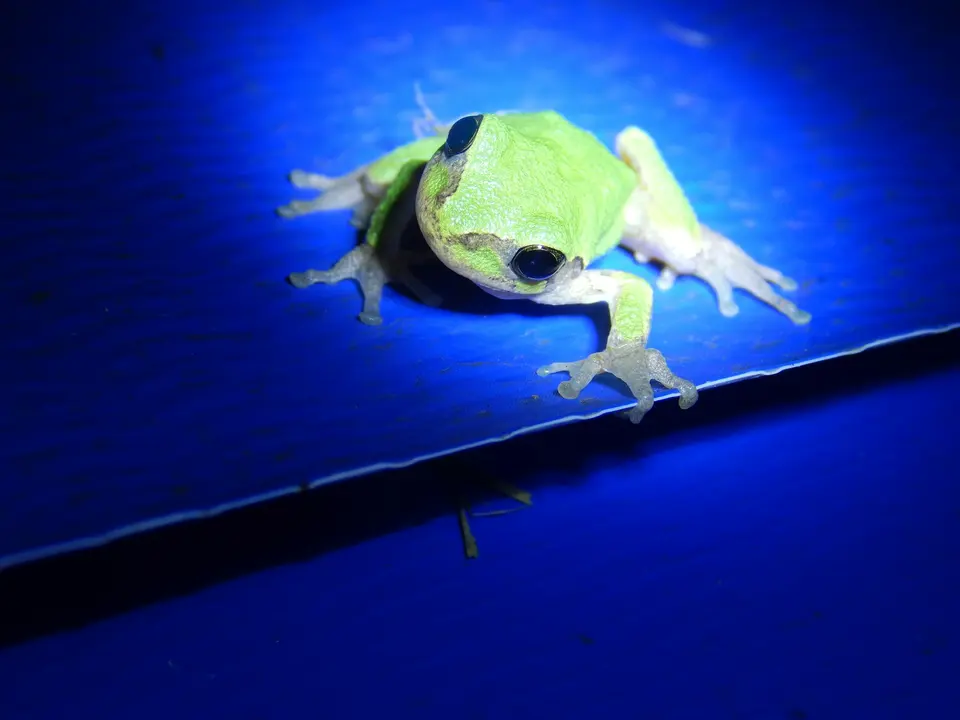
Eat the Frog is not bad advice.
It is incomplete advice wearing a confident hat.
The idea is simple:
Do your hardest task first.
Attack the ugly thing before the day eats you.
Great.
If your brain works well in the morning.
Terrible.
If your brain turns into wet cardboard before 10 a.m.
The problem is not the frog.
The problem is pretending every person has the same best hours.
You do not need to prove your discipline by doing your hardest work at the worst time.
That is not productivity.
That is cosplay with a planner.
The real rule
Do your hardest work during your strongest hours.
That is the rule.
Not morning.
Not 5 a.m.
Not whatever a person with a sunrise routine and suspicious lighting told you.
Your strongest hours.
For some people, that is early morning.
For others, late morning.
For others, afternoon.
For others, evening.
The move: Find the hours where your thinking is sharpest and protect those for the work that actually needs you.
Everything else is decoration.
Stop moralizing the morning
Morning productivity advice is full of secret judgment.
Wake up early.
Crush the hard thing.
Win before breakfast.
Lovely.
But early does not automatically mean better.
If you write garbage at 7 a.m. and good work at 2 p.m., the answer is not to punish yourself harder at 7 a.m.
The answer is to stop scheduling creative work during your personal mud hour.
You can still use mornings.
Just use them for the right kind of work.
Match task to energy
Sort your tasks into three energy levels.
Peak energy
Use this for:
- Writing
- Strategy
- Hard decisions
- Deep work
- Important client thinking
- Planning something complex
This is where the frog goes.
Whenever your peak actually happens.
Medium energy
Use this for:
- Meetings
- Review
- Editing
- Follow-ups
- Research
- Routine project work
Important, but not sacred.
Low energy
Use this for:
- Admin
- Filing
- Basic email
- Receipts
- Scheduling
- Cleanups
- Small errands
Do not waste peak energy on this stuff just because it is first in the inbox.
If email keeps stealing your best hours, use email triage instead of inbox zero.
Track one week
Do not guess.
Track.
For one week, write down:
- When did I feel sharp?
- When did work feel sticky?
- When did I make dumb mistakes?
- When did writing or thinking feel easier?
- When did I need movement, food, or rest?
No elaborate spreadsheet.
Just a note.
At the end of the week, circle your best two-hour block.
That is where your hardest work goes next week.
If you already know your best block, stop pretending you don’t.
Protect it.
What to do instead of eating the frog
Use this daily order:
- Prime the day: five minutes to choose the real priority.
- Protect peak work: do the hardest thinking during your best hours.
- Use low energy honestly: admin, cleanup, small replies, errands.
- Close loops: review what moved before the day ends.
That is less catchy than Eat the Frog.
It is also more useful.
Your body is not a motivational poster.
Work with the machine you actually have.
For the weekly version, use the 10-minute weekly review so you can see whether your schedule is helping or lying.
When Eat the Frog works
Eat the Frog works when:
- You are sharp early.
- The hard task is clear.
- Avoidance is the real problem.
- Morning interruptions are low.
- You have enough sleep to think.
Use it then.
Do not throw out useful advice just because it was over-sold.
But if the method keeps producing bad work, stop treating that as a character flaw.
The method may be mismatched.
Change the timing.
The Monday test
On Monday, do this:
- Pick your hardest task.
- Put it in your best energy block.
- Put admin in your weaker block.
- Compare the output to your usual day.
One day is not proof.
But it is a start.
Repeat for a week.
If the work gets better, keep the change.
If not, adjust again.
Productivity advice is not scripture.
It is equipment.
Use what fits.
The frog can wait until your brain is actually open for business.
Advertisement