Productivity
Your Environment Is a Productivity Tool (Most People Ignore It)
Your environment is a productivity tool. Fix the room before you blame your focus, your app, or your tragic lack of discipline.
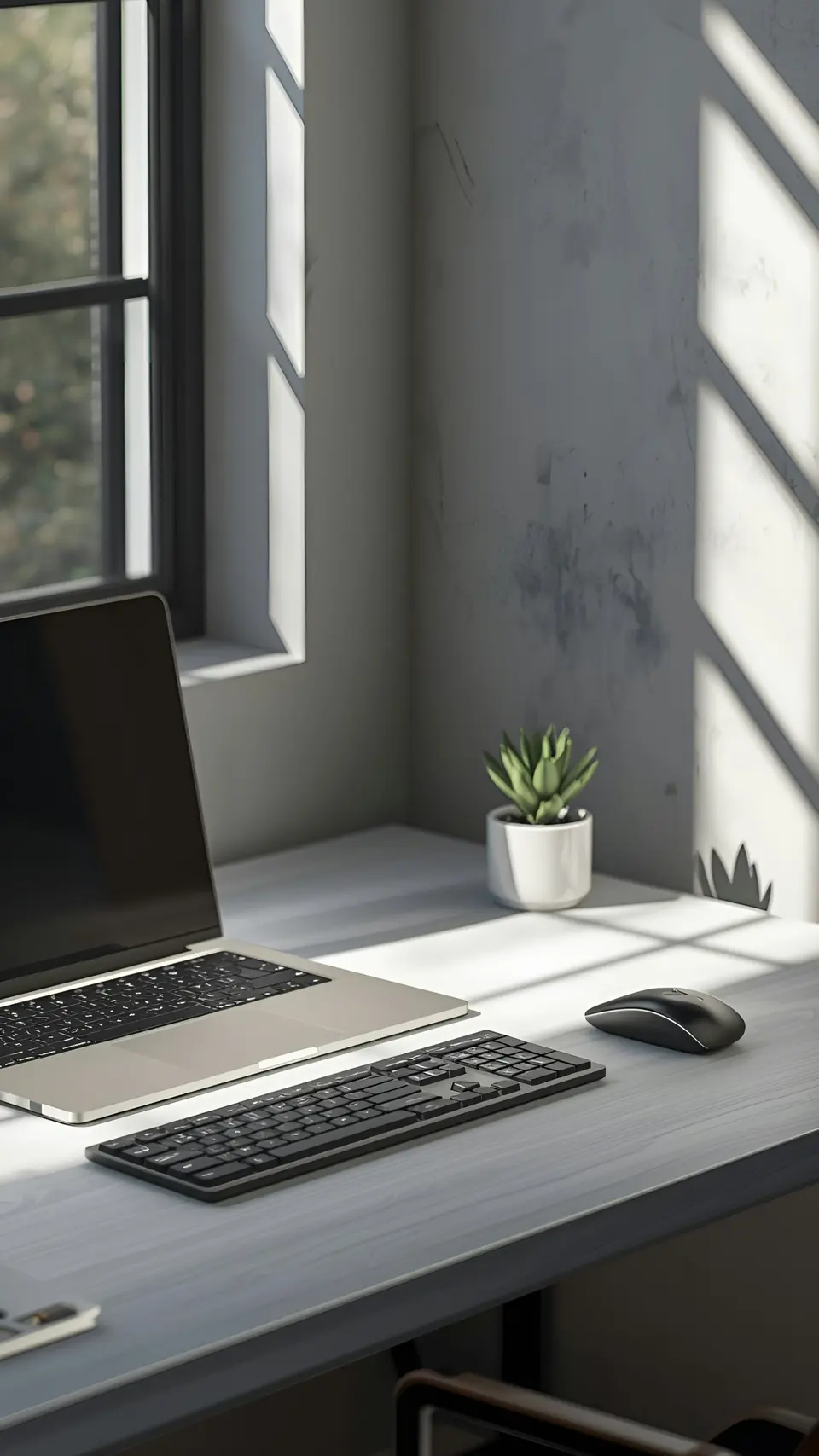
Your environment is a productivity tool.
Not a vibe.
Not a Pinterest board.
A tool.
And yours may be quietly punching your focus in the ribs.
You can have the perfect task manager, the perfect playlist, the perfect morning routine, and the perfect smug little notebook. If your phone is three inches from your keyboard and your desk looks like a paper avalanche, your system is working with one shoe tied together.
Fix the room.
Then judge your discipline.
Start with friction
Most people try to add motivation.
Wrong direction.
Remove friction first.
Your workspace is always telling you what to do.
If your phone is visible, it says, “check me.”
If your desk is cluttered, it says, “remember these twelve unresolved things.”
If your chair hurts, it says, “get up and wander into the kitchen for no reason.”
If the light is bad, it says, “be tired earlier.”
You may not hear these messages consciously.
Your attention does.
The move: make the good action easier and the dumb action slightly annoying.
That is environment design.
Not self-improvement poetry. Physics.
Move your phone like you mean it
This is the easiest win.
Also the one people resist like it has legal consequences.
If your phone is on your desk, it is part of your work environment.
Even face down.
Even on silent.
Even with your very impressive claim that you “just don’t check it.”
Please.
Your hand has checked it before your philosophy finished its sentence.
Do this now
Put your phone:
- across the room
- in a drawer
- outside the room
- in a bag
Pick one.
The goal is not to make phone use impossible.
The goal is to make it require standing up.
That tiny bit of friction saves more focus than another app blocker you will disable the first time boredom knocks.
If your bigger issue is digital mess, the browser tabs problem is the same principle in screen form. Put distance between you and the easy distraction.
Fix what your eyes see
Your eyes are not just for reading.
They are constantly scanning.
Movement. Clutter. Light. Screens. Open loops. Random objects with tiny unfinished stories attached to them.
The pile of papers on your desk is not neutral.
It is an attention leak.
The unpaid bill near your monitor is not neutral.
It is a tiny guilt billboard.
The second screen with Slack open is not neutral.
It is a slot machine wearing office clothes.
The move
Clear the area inside your direct line of sight.
Keep only:
- the tool you are using
- water or coffee
- one notebook if needed
- the object required for the current work
Everything else moves.
Not forever.
Just out of sight.
This is not minimalism. Minimalism got annoying when people started treating empty desks like a religion.
This is tactical visibility.
Your work should be the loudest thing in the room.
Light is not decoration
Bad lighting makes work feel heavier.
Too dim, and your eyes strain.
Too harsh, and your body starts quietly resenting you.
No daylight, and your brain loses a useful time signal.
You do not need a designer office.
You need enough light to read comfortably and enough natural light to remind your body it is not trapped in a storage unit.
Do this now
If you can, sit near a window.
Not necessarily facing it.
Near it.
If you cannot, get one decent desk lamp and aim it at the work surface, not your eyeballs.
Then test it for a week.
Do not buy five lamps and turn your office into a showroom. Fix the obvious problem first.
This is the same boring truth behind cheap home office upgrades that actually help: the best fixes are usually small, physical, and unsexy.
Noise is about predictability
Silence is not always the goal.
Predictability is.
Some people work well with coffee shop noise because it is steady.
Some people cannot handle one Slack ping because it is unpredictable.
Your nervous system cares about surprise.
That is why a low hum can be fine, but one random notification can ruin the next eight minutes.
The move
Pick your noise lane before you start:
- silence
- steady ambient noise
- music without words
- noise-cancelling headphones
- one repeat playlist
Do not keep adjusting it every ten minutes.
That becomes another tiny escape hatch.
If you need music, use it as a cue: same playlist for the same kind of work. Your brain likes patterns when they are useful.
Temperature counts too
This one sounds boring because it is.
Still matters.
Too warm and you get slow.
Too cold and your body starts spending attention on not being annoyed.
You may not be able to control the whole room, but you can usually control layers, airflow, a fan, a blanket, or where you sit.
Do not be heroic about discomfort.
Nobody gets a medal for answering email in a room that feels like soup.
Do not turn this into another optimization maze
Important warning.
Environment design can become procrastination with a nicer chair.
You can absolutely waste a week “improving your workspace” instead of doing the work.
So use this rule:
Fix the obvious friction, then stop.
Phone away.
Desk clear.
Light decent.
Noise chosen.
Temperature tolerable.
Done.
You do not need the perfect desk setup. You need a room that stops fighting you.
If you can feel yourself drifting into setup obsession, read the trap of optimization. That post exists for exactly this moment.
The room is part of the system
People love invisible productivity advice because it sounds sophisticated.
Mindset. Motivation. Identity. Systems.
Fine.
But sometimes the answer is brutally physical.
Move the phone.
Clear the desk.
Turn on a better lamp.
Close the noisy tab.
Put the notebook where your hand can reach it.
Your environment is not separate from your productivity system.
It is the part of the system that acts on you before you remember to act on yourself.
Fix the room first.
Advertisement